Holding Tension Together: Flo and Roseleiya’s Dialogic Practice
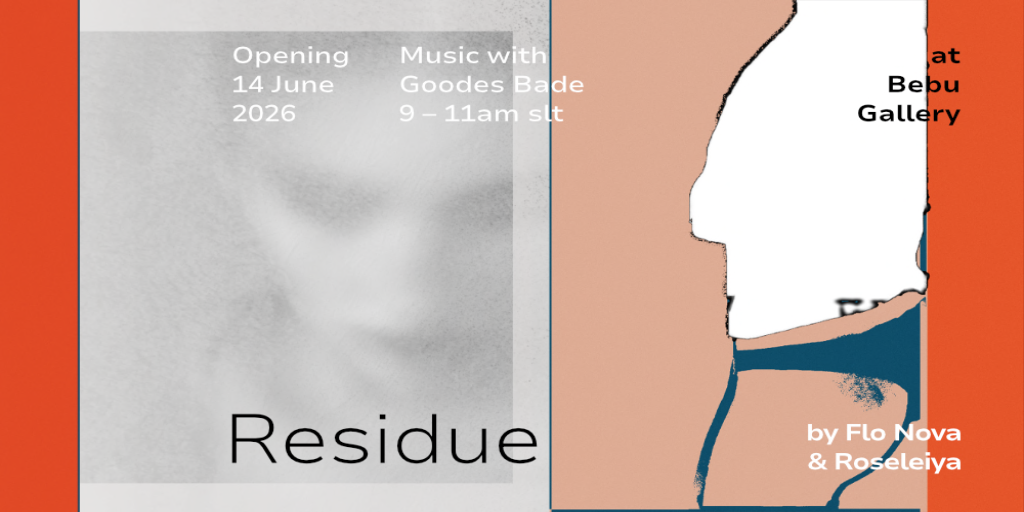
“I have learned that my image, my reflection, is not my own”.
A case could be made that this quote from Emily Ratajkowski (My Body) sits at the heart of this exhibit. An argument that: being admired for your body can still mean losing control over how that body is seen, used, valued.
Now on view at the Bebu Gallery – these two artists. Flo Nova and Roseleiya, have engaged in a collaboration where this idea (both consciously and unconsciously) is a part of their premise….including how one responds to that “admiration” … Do you adapt? Do you resist?
A bit of history brings us forward….
The term “female gaze” does not have a single universally agreed first writer, but in film theory it is often traced back to British film theorist Laura Mulvey who was actually writing about the “male gaze”. In 1975, the academic journal Screen published Mulvey’s essay, Visual Pleasure and Narrative Cinema.
It remains a groundbreaking critique of classical Hollywood cinema, and Mulvey argues it’s constructed around patriarchal ideologies that shape how women are represented onscreen. Mulvey came to prominence in the 1970’s when second-wave feminism was reshaping both cultural and academic conversations. The text transformed how scholars, film critics and audiences think about the relationship between gender and onscreen representation. If you are interested in the history of this theory as explained by Mulvey herself, I invite you to look HERE

James Stewart, Rear Window (1954)
Contrary to Mulvey’s approach, uses of the “gaze” today—be it the male gaze, the white gaze, the straight gaze—all seem more invested in matters of identity than in the project of aesthetic analysis. Wanting to name who is doing the looking rather than how.
“Looking,” in this scenario implies identity – and implies power. More recent feminist thinking emphasizes agency, subjectivity, embodiment, curiosity, and self-representation instead of just flipping who is looking at who….
“…..any large-scale picturing of women belongs to the ongoing story
of how women are presented, and how they are invited to think of themselves.” Susan Sontag
Which brings us to:
Residue.
Residue is not simply a two-person exhibition; it is a sustained conversation between two distinct artistic sensibilities that meet in shared concerns around the body, perception, and emotional intensity. Flo Nova and Roseleiya approach image-making from seemingly opposite directions—one through immediacy and transformation, the other through restraint and reduction—yet the exhibition reveals how these differences can generate a cohesive and deeply resonant visual language.
In terms of style, their contrast is striking. Flo’s work is saturated, graphic, and often pushes photography toward abstraction through color, layering, and digital intervention. Her images carry a sense of urgency, shaped by a fast, experimental process – embracing uncertainty. Roseleiya, by contrast, works with muted tones, grayscale, and soft transitions, maintaining a closer fidelity to the photographic image. Her compositions are sparse and measured, often allowing the subject to recede rather than assert itself.
Yet despite these visual divergences, both artists are engaged in a similar formal and emotional project. Each uses negative space, asymmetry, and contrast to create tension within the frame. Figures are rarely centered or stable; instead, they appear fragmented, suspended, or partially obscured. A shared compositional approach reflecting a deeper alignment: a commitment to expressing emotion not through narrative but through spatial and visual relationships.
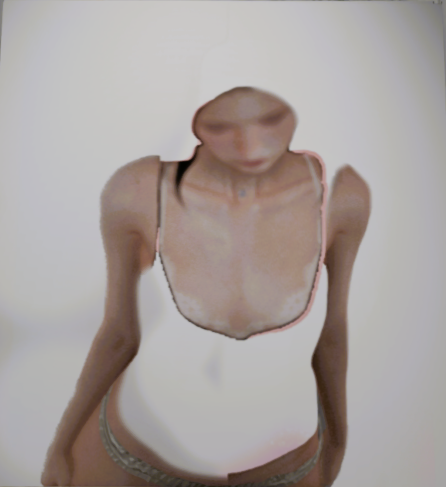
Figure 2 (Flo Nova)
The body—specifically the female form—sits at the center of this exploration. Both artists consciously resist the conventional visual language that renders the body as performative or objectified. Instead, they present it as something more elusive: a site of sensation, memory, and unresolved intensity. In Flo’s work, this often manifests as distortion and expressive fragmentation, where the body becomes a field of energy and color. In Roseleiya’s images, the body is softened, partially absorbed into its surroundings, or held at a distance, resisting full visibility.
I think Flo’s work often has a more direct visual energy. She is very comfortable with color, graphic intervention, cutting, layering, and expressive intensity. Her images can feel bold and immediate. Roseleiya
I really admire Rosy’s eye with photography, I had the treat of taking a few images with her when we first met. Unlike me, she sits with an idea, an angle or a frame and patiently finds the exact method and composition that achieves what she had imagined. She often tells me how she wishes she could make images faster, but I think her slowness is exactly what defines her work. Flo Nova
What emerges across Residue is a shared interest in what might be described as the afterlife of feeling. Both artists speak, in different ways, to the experience of “housing intensity” within the body—of carrying emotion that does not easily resolve. The fragmented figures that populate the exhibition can be understood as residues of that experience: traces rather than complete forms, suggesting something that has been felt but not fully articulated.
This conceptual alignment is reinforced by the deeply collaborative nature of the project. From its inception, Residue was built through ongoing dialogue. Flo and Roseleiya developed the exhibition through a process of open exchange, critique, and mutual responsiveness, continuously viewing and responding to each other’s work. The result is not a juxtaposition of two separate practices but an interwoven field of images, where each artist’s decisions are shaped in relation to the other.
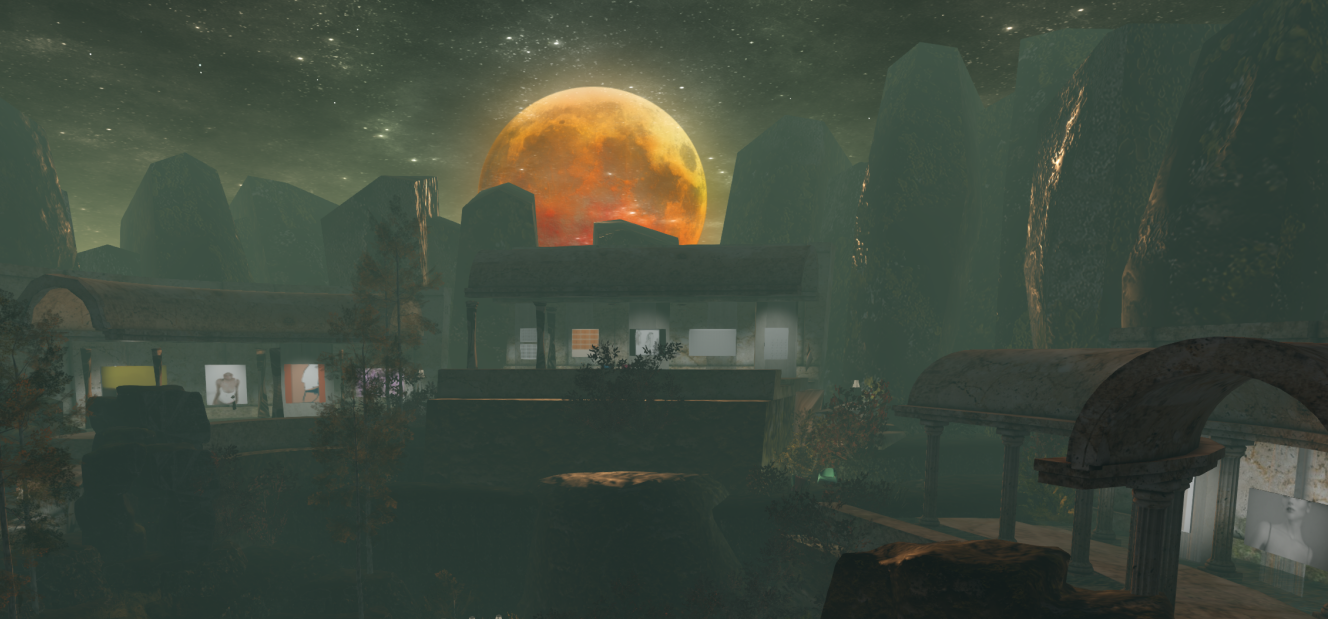
Installation view @ the Bebu Gallery
Their differing working methods further enrich this dynamic. Flo’s rapid, generative approach—capturing images impulsively and refining them through selection—contrasts with Roseleiya’s slower, more deliberate process of composing and waiting for the right image to emerge. Rather than creating friction, this difference operates as a kind of balance. Each artist articulates, and perhaps compensates for, what the other resists: speed and stillness, excess and restraint, declaration and withholding.
Both artists also situate their practices in relation to broader questions about image-making in a digital age. While Flo embraces digital tools to simulate and extend analogue processes, and Roseleiya remains closer to photographic minimalism, both emphasize the importance of human presence in their work. They articulate a shared skepticism toward AI-generated imagery, not as a wholesale rejection but as a recognition of its limits. For each of them, what distinguishes art is not simply its appearance but the lived experience, risk, and decision-making embedded within it—qualities that cannot be fully replicated by algorithmic systems.
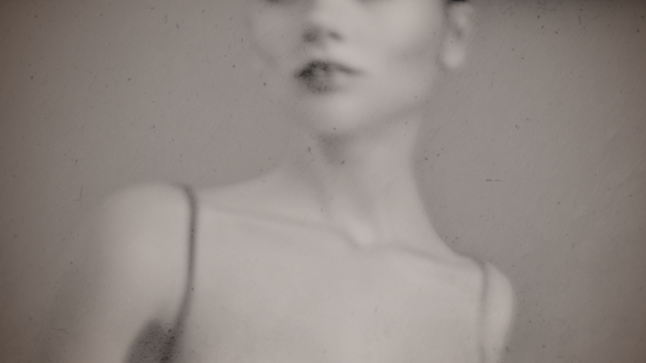
Partial. (Roseleiya)
In terms of influence, their references diverge while reinforcing their shared concerns. Flo draws from artists such as Tracey Emin, Louise Bourgeois, Christina Quarles, and David Hockney – work that foregrounds the expressive potential of the body through distortion and mark-making. Roseleiya, while less explicitly tied to specific movements, acknowledges affinities with traditions like Impressionism and Pictorialism, refracted through a personal sensibility shaped by Hungarian landscapes and atmospheres of melancholy and distance. Together, these influences situate Residue within a broader lineage of artists grappling with how to represent interior states through the body.
Even the music they are currently listening to echoes this interplay. Flo’s engagement with techno, experimental pop, and cinematic soundtracks introduces rhythm and intensity, while Roseleiya’s preference for ambient music emphasizes slowness, texture, and subtle variation. These auditory sensibilities parallel their visual approaches, reinforcing the exhibition’s oscillation between movement and stillness.
Ultimately, Residue is less about resolving differences than about sustaining them. The exhibition demonstrates how two artists, working independently, can arrive at a shared space of inquiry—one that neither could fully articulate alone. In doing so, it proposes a model of collaboration grounded not in sameness but in tension, where contrast becomes a generative force.
What remains, in the end, are not definitive statements but fragments, atmospheres, and encounters. The work does not ask to be fully understood; it asks to be felt, to be sat with. In that sense, Residue lives up to its name—not as something left behind, but as something that continues to linger, quietly shaping how we see and sense the body in space.
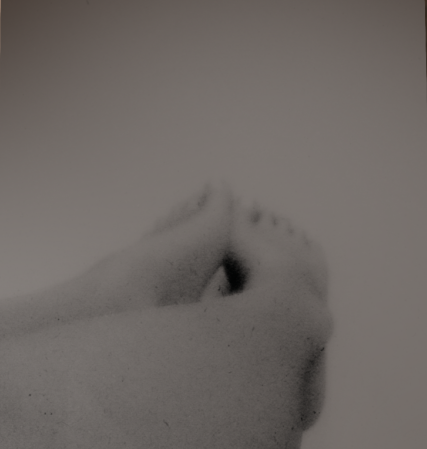
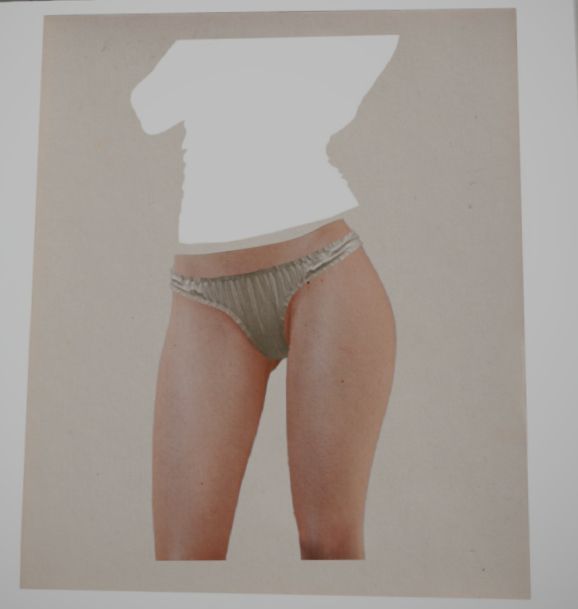
(Roseleiya)
Figure 5 (Flo Nova)
The Bebu Gallery is currently housed in an exceptionally beautiful build by Konrad Rune of Nathimmel fame. Please feel free to come and explore. (In addition, there is generally music on Sundays from 9 – 11 am slt)
Residue will be up through the summer.


